
Staying Healthy During Flu Season ❄️
As temperatures begin to fall and winter approaches, November is an important time to raise awareness about seasonal influenza, commonly known as flu.
At springcare support services, protecting the health, safety and wellbeing of the people we support, our staff and the wider community remains a priority.
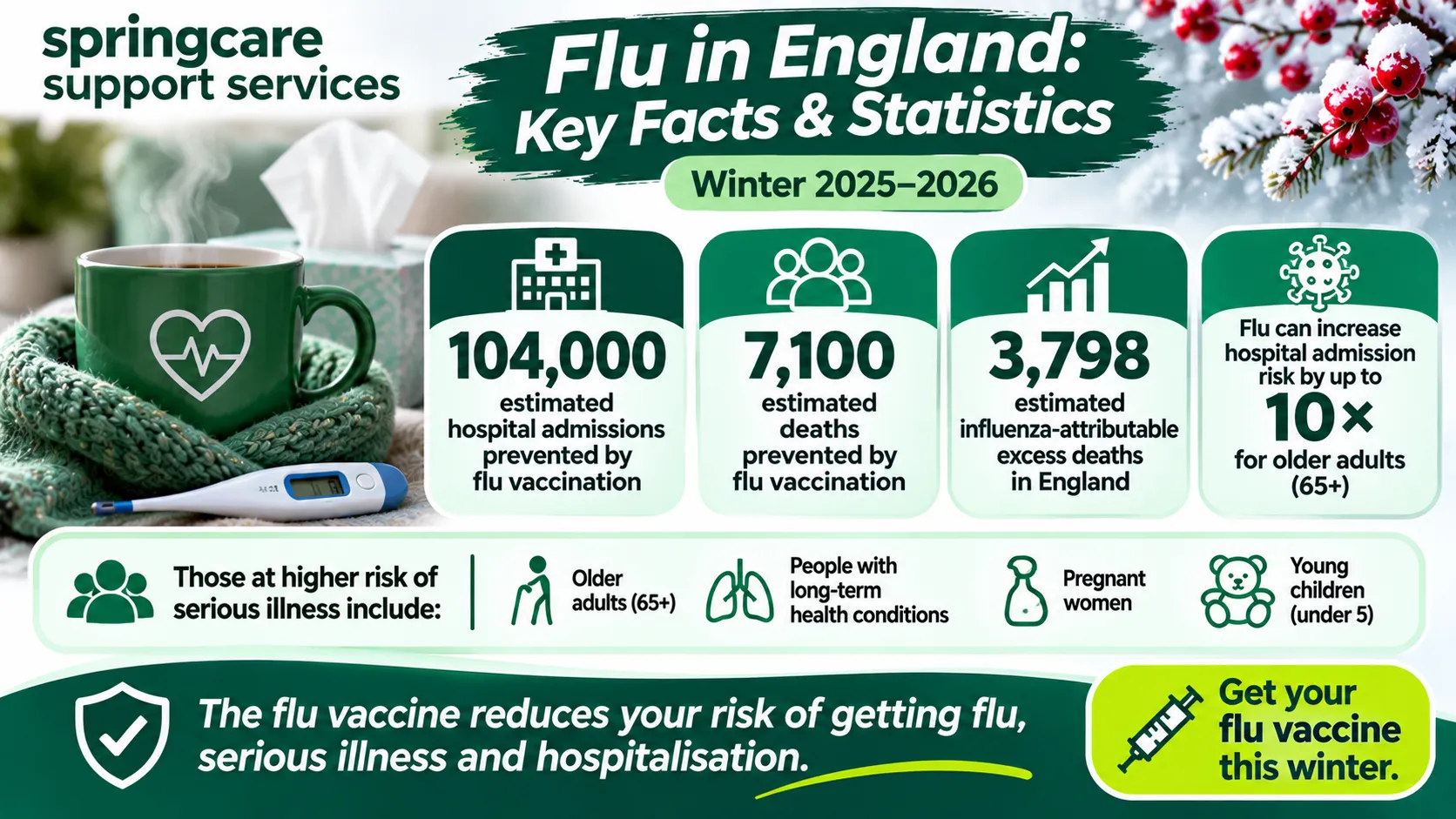
Although flu is often mistaken for a common cold, it can cause serious illness, particularly among older adults, young children, pregnant women and people living with certain long-term health conditions.
This winter, we are encouraging everyone to take simple but effective steps to reduce the spread of infection and help protect those most at risk.
What Is Flu?
Flu is a contagious respiratory illness caused by influenza viruses. It primarily affects the nose, throat and lungs and can spread easily between individuals.
Unlike the common cold, which often develops gradually, flu symptoms can appear suddenly and may leave individuals feeling extremely unwell.
Common symptoms include:
- A sudden high temperature or feeling feverish.
- A persistent cough.
- Headaches and muscle aches.
- Extreme tiredness and weakness.
- A sore throat.
- A runny or blocked nose.
- Loss of appetite.
- Occasionally, nausea, vomiting or diarrhoea.
Not everyone with flu will experience all these symptoms, and some individuals may not develop a high temperature.
For people with underlying health conditions or weakened immune systems, flu can sometimes lead to complications, including pneumonia, dehydration and worsening of existing medical conditions.
Recognising symptoms early and taking appropriate precautions can help prevent further transmission.
Why Flu Prevention Matters in Health and Social Care
Within health and social care settings, infection prevention is especially important.
Many individuals receiving domiciliary care, community support or supported living services may be more vulnerable to complications from respiratory infections.
For example, some people may be living with respiratory conditions, reduced mobility, disabilities or other health needs that make recovering from flu more challenging.
At springcare support services, we recognise the responsibility that care professionals have in reducing infection risks and supporting individuals to remain safe.
Good infection prevention practices help protect not only the individual receiving care but also their families, support workers and the wider community.
The Importance of the Seasonal Flu Vaccination 💉
One of the most effective ways to reduce the risk of flu and its complications is through seasonal vaccination.
The flu vaccine is updated regularly to provide protection against influenza viruses expected to circulate during the flu season.
Although vaccination cannot guarantee that someone will not catch flu, it can reduce the likelihood of illness and serious complications.
In England, NHS flu vaccination is available free of charge to eligible groups, including many older adults, pregnant women, people with certain long-term health conditions and eligible frontline health and social care workers.
Eligibility can vary between vaccination programmes, so individuals should check the current NHS guidance or speak with their GP or pharmacist.
At springcare support services, we encourage our staff and the individuals we support to make informed decisions about vaccination and access appropriate healthcare advice.
Six Simple Ways to Reduce the Spread of Flu
Preventing infection requires everyone to play their part.
1. Wash Your Hands Regularly
Wash hands thoroughly with soap and water, particularly before preparing food, after coughing or sneezing, and when providing personal care. Alcohol-based hand sanitiser can be used where appropriate.
2. Cover Coughs and Sneezes
Use a tissue to cover your mouth and nose when coughing or sneezing. Dispose of used tissues immediately and wash your hands afterwards.
Remember: Catch it, Bin it, Kill it.
3. Stay Home When Unwell
If you develop flu-like symptoms, avoid close contact with others where possible until you feel better and no longer have a high temperature.
Care staff should report symptoms to their manager and follow workplace infection prevention procedures before attending shifts.
4. Clean Frequently Touched Surfaces
Regularly clean surfaces such as door handles, light switches, mobile phones, tables and shared equipment.
5. Maintain Good Ventilation
Allowing fresh air into indoor spaces can help reduce the concentration of respiratory viruses in the air.
6. Support a Healthy Lifestyle
Adequate sleep, balanced nutrition, regular physical activity and staying hydrated all contribute to general health and wellbeing.
Recognising When Someone May Need Additional Support
For people receiving care, flu symptoms may affect their ability to complete everyday activities independently.
Someone who usually manages their personal care, meals or mobility may temporarily require additional assistance.
Care professionals should remain alert to changes in an individual’s usual presentation, including:
- Increased tiredness or unusual weakness.
- Reduced food or fluid intake.
- Changes in breathing.
- Increased confusion or changes in behaviour.
- Difficulty completing usual daily activities.
- Signs of dehydration.
Where concerns arise, staff should follow the individual’s care plan, organisational procedures and appropriate escalation pathways.
Early communication with healthcare professionals can help ensure that individuals receive timely advice and treatment.
Our Commitment to Infection Prevention at springcare support services
At springcare support services, we recognise that effective infection prevention is a fundamental part of delivering safe, high-quality, person-centred care.
Across our domiciliary care, community support and supported living services, we aim to promote safe working practices that protect the individuals we support and our staff.
Our approach includes:
- Promoting effective hand hygiene and appropriate use of personal protective equipment.
- Encouraging staff to follow infection prevention and control procedures.
- Supporting individuals to access healthcare services and vaccination information.
- Recognising and reporting changes in health and wellbeing.
- Maintaining appropriate cleaning and hygiene standards.
- Providing staff with relevant infection prevention training and guidance.
- Working collaboratively with families and healthcare professionals where appropriate.
We believe that infection prevention is a shared responsibility and that consistent everyday actions can make a meaningful difference.
What Should You Do If You Think You Have Flu?
Most people with flu can recover at home with rest, adequate fluids and appropriate symptom relief.
However, some individuals may require additional medical advice, particularly if they are at increased risk of complications.
Contact your GP or NHS 111 if you are concerned about symptoms, belong to a higher-risk group or notice that symptoms are worsening.
Seek urgent medical assistance for serious symptoms, such as significant breathing difficulties, chest pain or sudden confusion.
For life-threatening emergencies, call 999.
For further information about flu symptoms, vaccination and treatment, visit the NHS website:
www.nhs.uk/conditions/flu/
Working Together for a Healthier Winter 💙
As we move through November and into the colder months, we encourage everyone to remain mindful of their health and the wellbeing of those around them.
Small actions such as washing our hands, staying home when unwell, considering vaccination and checking on vulnerable family members can help reduce the spread of flu.
At springcare support services, we remain committed to promoting independence, dignity, safety and wellbeing through compassionate, person-centred care.
This winter, let’s work together to protect ourselves, support one another and keep our communities healthier and safer.
Because protecting health is everyone’s responsibility.
Springcare support services
Promoting independence, dignity and wellbeing through compassionate, person-centred care.